
- Home
- Brand
- Connectivity
- 3.5mm Line (4)
- 3g-sdi (6)
- Bluetooth (27)
- Bluetooth, Wireless (21)
- Digital Rf Wireless (9)
- Hdmi (9)
- Infrared Wireless (8)
- Mini-xlr (5)
- Tbd (31)
- Uhf (18)
- Uhf, Wireless (14)
- Wired (10)
- Wireless (867)
- Wireless Xlr (10)
- Wireless, (5)
- Wireless, 2.4ghz (7)
- Wireless, Bluetooth (9)
- Wireless, Fm (7)
- Wireless, Xlr 3 Pin (14)
- Xlr 3 Pin (4)
- ... (4767)
- Frequency Range
- 100meters (328 Feet) (5)
- 10m (3)
- 195-216mhz (4)
- 195-230mhz (19)
- 2.4g / 5g (4)
- 2.4ghz (5)
- 2.4ghz / 5ghz (14)
- 2400 2483 5mhz (2)
- 2400-2480mhz (3)
- 5 Ghz (10)
- 5.180~5.825ghz (3)
- 5.8ghz (15)
- 550-573 (5)
- 572-603mhz (3)
- 5ghz (12)
- 780-805mhz (7)
- 902-928mhz (5)
- Fm:87~108mhz (6)
- Uhf:430~450mhz (3)
- 1300 (2)
- ... (5722)
- Model
- 3pv (17)
- Adapter (12)
- Blx14 / Pga31 (24)
- Blx24 / Sm58 (14)
- Blx288 / B58 (9)
- Blx288 / Beta58a (17)
- Blx288 / Pg58 (11)
- Btr-700 (8)
- Dmx512 (13)
- Dx5 (19)
- Ft11 (11)
- Ft11+pr13 (13)
- Mars 400s (11)
- Mars 400s Pro (12)
- Rode Wireless Go (17)
- Rt5066 (10)
- Spektrum Ar10400t (8)
- Spm6775 (8)
- T130-t131 (10)
- Wpm-200 (42)
- ... (5566)
- Ports
- Type
- Adapter (46)
- Base Station (23)
- Condenser Microphone (13)
- Controller Set (11)
- Dmx Controller (32)
- Dmx Receiver (20)
- Ham Radio Receiver (11)
- Handheld (13)
- Hdmi Extender (12)
- Image Transmission (15)
- In Ear Monitor (30)
- Intercom (12)
- Lavalier (75)
- Microphone Receiver (55)
- Prc Radio (10)
- Radio Equipment (29)
- Receiver (140)
- Transmitter (254)
- Transmitter Receiver (25)
- Wireless (17)
- ... (5009)
Diy 80/40/30 Meter Cw Qrp Battery Powered Ham Radio Receiver/ Transmitter
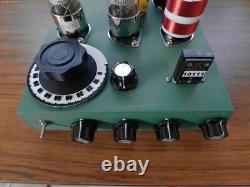
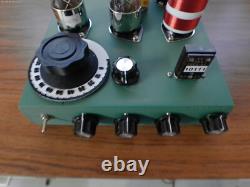
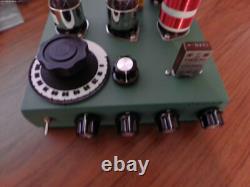
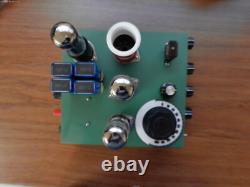
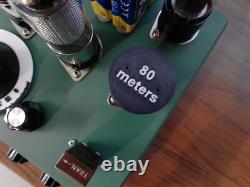
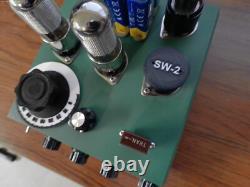
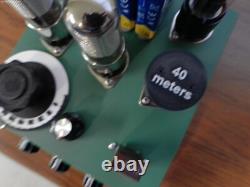
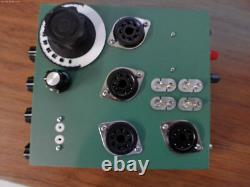
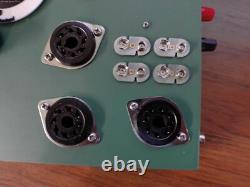
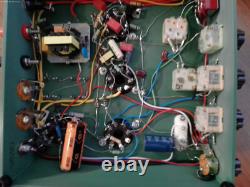


This is NOT an easy build. I've made hundreds of radios like this, but it still takes me several days to complete the project. There's no manual with this item.
You'll receive a schematic, along with all the parts, except for the magnet wire. A 3D printed chassis is included, like the one in the photos. With proper coils, and/or micro inductors and crystals, the transmitter is capable of working the HF bands, 160 thru 20 meters.
I've had the transmitter working on 15 meters, but the receiver gets really touchy, trying to push it to 21 mhz. Three octal coil forms are included, along with several sheets of data for different coils that I've made over the years. With appropriate plug-in coils and/or micro inductors, this regenerative receiver is capable of coverage from 100 khz long wave, up 17 mhz or higher, shortwave.
Coverage is continuous, by changing coils. In transmit mode, this item has exposed high voltage underneath the chassis. Sticking your fingers in the chassis with high voltage on can kill you dead! As you can tell by my feedback you'll always receive what is described. Essentially, this is just a modern day version of the old WWII Paraset Spy Radio, with a few improvements.
The circuit has a battery powered 12 volt dc to ac inverter, and the rectified, no load dc voltage underneath the hood is over 300 volts. So even though the power source comes from harmless low voltage batteries it can still be just as lethal as 117 volt ac power from a wall outlet, if not handled responsibly. This is a vacuum tube ham radio QRP cw transmitter and regen radio. Patterned somewhat after the Paraset Spy radio, it uses two 6SK7 pentode tubes for the receiver and a 12V6 in lieu of the 6V6 for the transmitter. It has a Pi-network output tank circuit for harmonic reduction.With my bench top 12 volt dc power supply, or a 12 volt battery, I get about 6 to 8 watts input on 80 meter cw. The receiver circuit requires 4 nine volt batteries to power the detector and audio amp circuits.
If you intend to power this radio with a 12 to 14 volt dc bench power supply, it should be capable of delivering about 2.5 to 3 amps of dc current when the high voltage inverter is running. No batteries or other powers sources are included in this listing. The inherent problem with regen radios is that it is difficult to run them with rectified dc from an ac transformer located on the same chassis. I gave up with that sort of design, as any sensitive regen typically picks up a horrid ac background hum.So this regen runs strictly off battery power (or imported dc from a separate power supply). This eliminates the hum problem, since, in transmit mode, this is the only time that the dc inverter is running, at which time the send/rec switch mutes the headphones. The inverter, which powers only the transmitter tube, turns off instantly when switched to receive mode. This little rig loads up nicely on 80, 40 and 30 meters.
In my experience I have very little issues with chirp when using the 49/U QRP crystals. On those occasions when I get a hint of chirp I can usually tune it out by careful adjustment of the plate input capacitor to the Pi-network tank circuit. As an improvement over the old Paraset design, I have included a fine tuning control for clarifying cw and ssb signals. You will need high impedance headphones for the receiver (not included), either the old standard 2 to 4K ohm inductive types or piezo headsets will work. Included is a hand-sketched wiring diagram of this item, but again, there is no step by step construction manual.